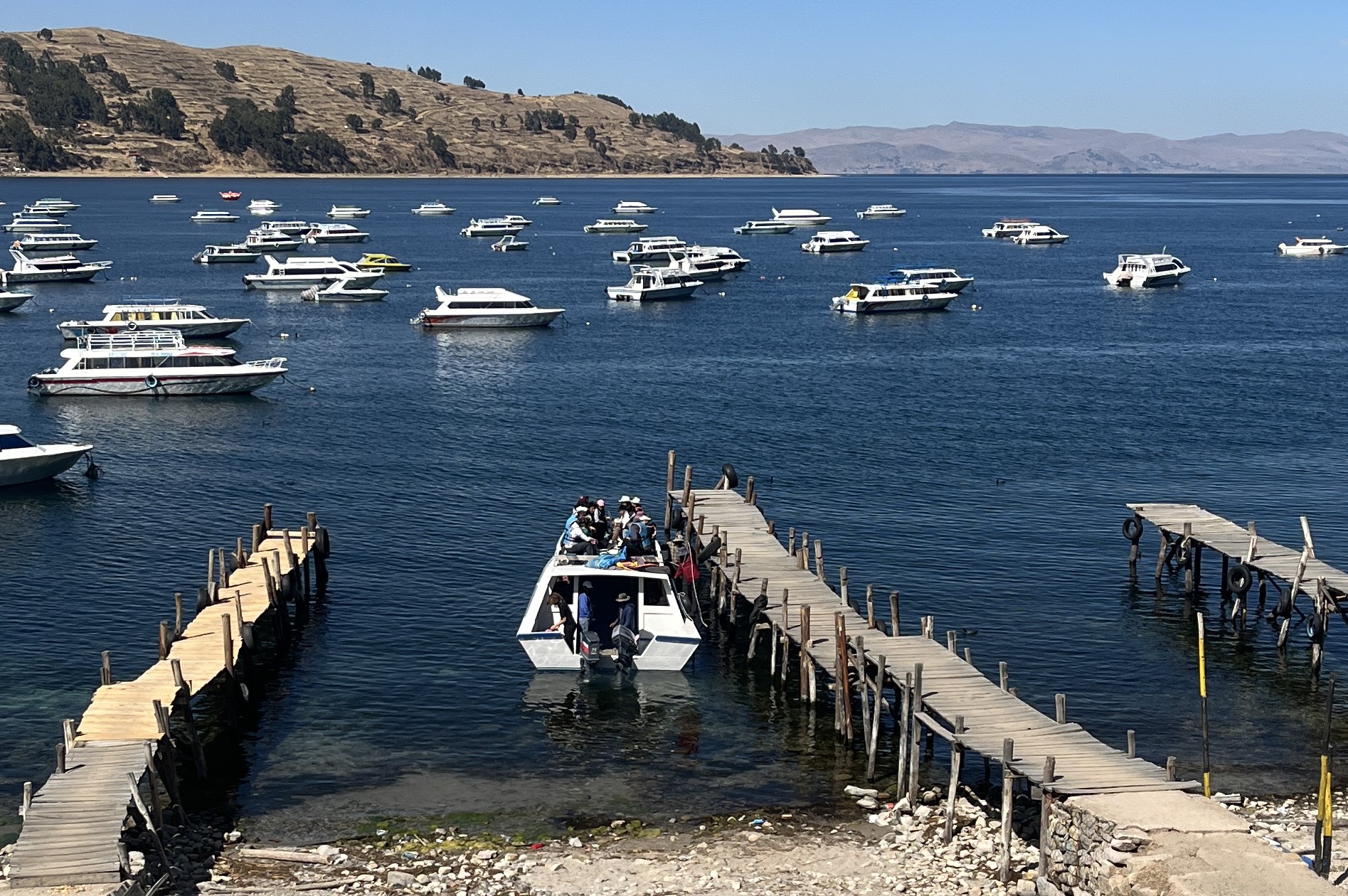
The Isla del Sol or Island of the Sun is an island located on the Bolivian side of Lake Titicaca. It was, and still is, a very important place for several cultures and is also a great destination to visit from Copacabana as a tourist. The harbour in Copacabana has lots of boats but there are only a few working this time of year and so I booked a ticket through my hostal on to the 9:00am boat which left promptly at 9:30. The boat was full, slow and a little boring to be honest. I’m pretty sure it would fail most of the safety regulations for Australian boats, but I guess we were only sailing on a lake so it doesn’t matter. Despite it being freezing cold and very deep. I opted for sitting inside and taking my chance if we overturned and not sit on top and get fried by the sun like the other half of the passengers.
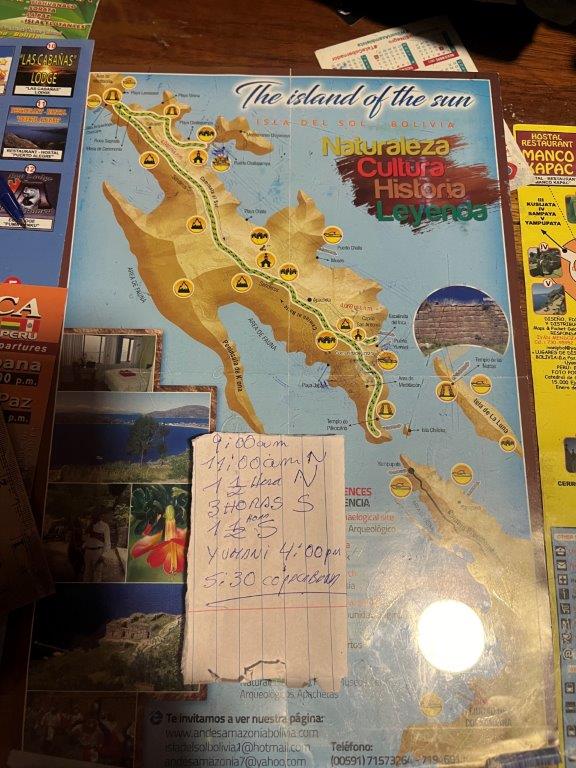
After what seemed a long 2 hours we made it to Puerto Challapampa on the northern end of the island. The plan was to walk from there to the north end of the island and then follow the well trodden path to the south end of the island to Puerto Yumani and catch the 4:30pm boat back. It was about 10kms of undulating stoney track at around 4000 metres. I had met a young fit Dutch guy at the hostal and he was struggling with the heat and the altitude.
At that elevation the atmospheric pressure is about 600hPa (hectopascals) compared to 1000hPa at sea level. It means there is 40% less pressure, and the air is thinner, which makes it harder to get air into your lungs. The oxygen level in the air is still at 21% but your oxygen saturation levels in your body are between 80 and 90 percent when they would normally be at 100 percent. So it is harder. You body does get more efficient and your breathing and heart rate increases as does your red blood cell production after a while. I was puffing at times but recovered quickly.
There are about 800-1000 Aymara people who live on the island. Mainly in the two towns where the boats are. Their ancestors have lived here and in other parts of the Andes for thousands of years. The Aymara language is one of the official languages in Bolivia, alongside Spanish and Quechua. It has a complex structure and is spoken by millions of people. They have survived the invasion of the Inca’s and then the Spanish and probably others before and now they are adapting to the invasion of us. The tourist. They still practice a lot of the cultural traditions to do with nature and ancestral spirits. Their clothing and farming habits are also still traditional.
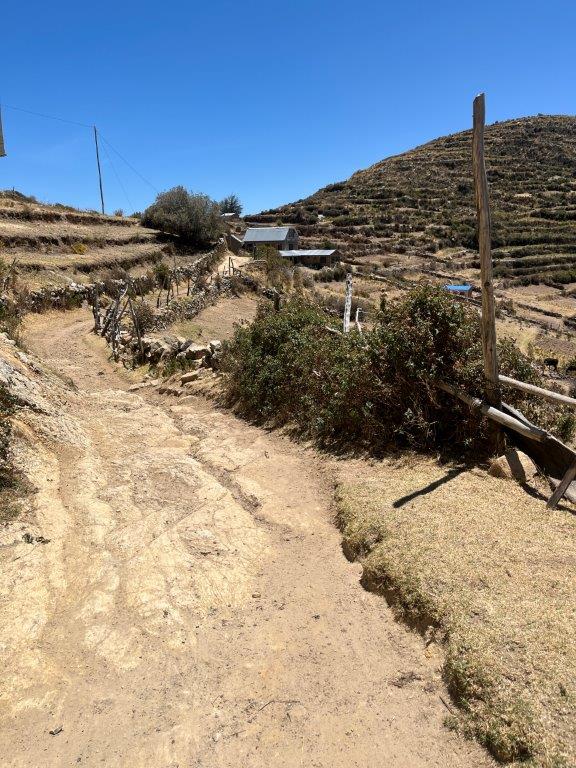
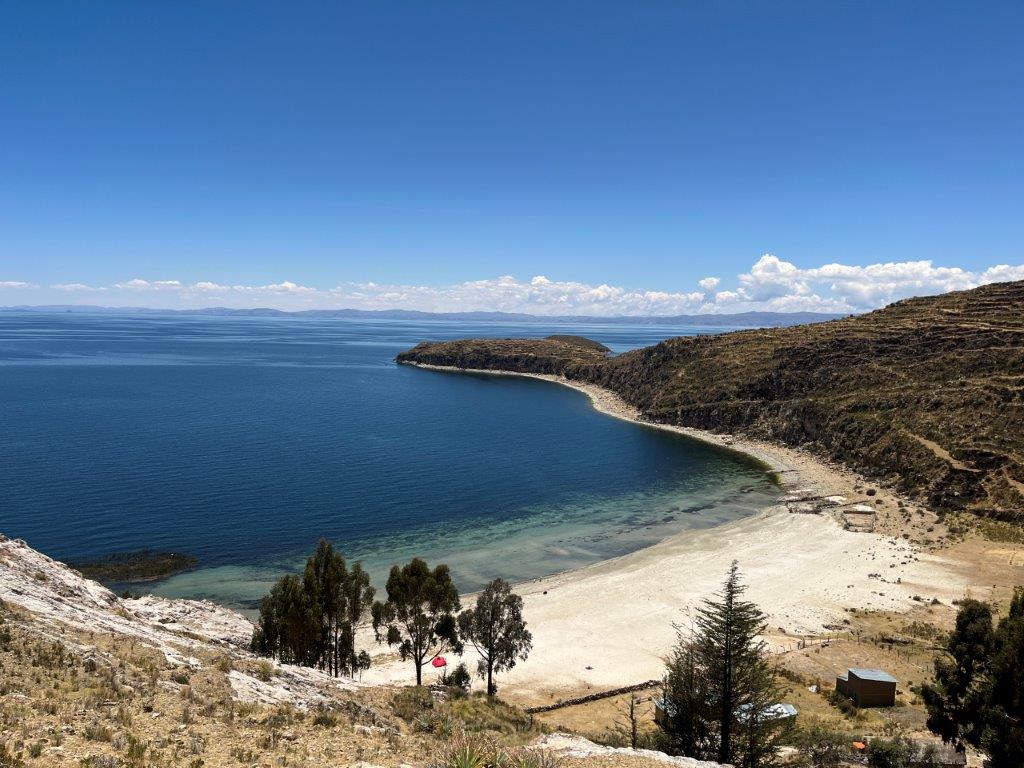
So much of the steep land around Titicaca has been terraced by the Aymaran people. They have been farming maize, quinoa and potatoes on these terraces forever. And we all think quinoa is a new health food. The Incans saw the value of terracing and took it to other parts of their empire.
When you get off the boat you have to pay a 2Bs (two bolivianos) fee to use the toilet. I’d say that’s a great little money earner. Forty five Aussie cents a go. Unless you are peeing on the blackmarket rate like me and it’s only 30 cents. Winning. You also have to pay an entrance or hiking fee of 15Bs to walk the track. Which I think is great. That was also your entrance into the gold museum but I must have been looking at the beautiful scenery and missed the turn off to that. And it was beautiful. Perfect weather and I felt like I was in the Greek islands. Without oxygen.
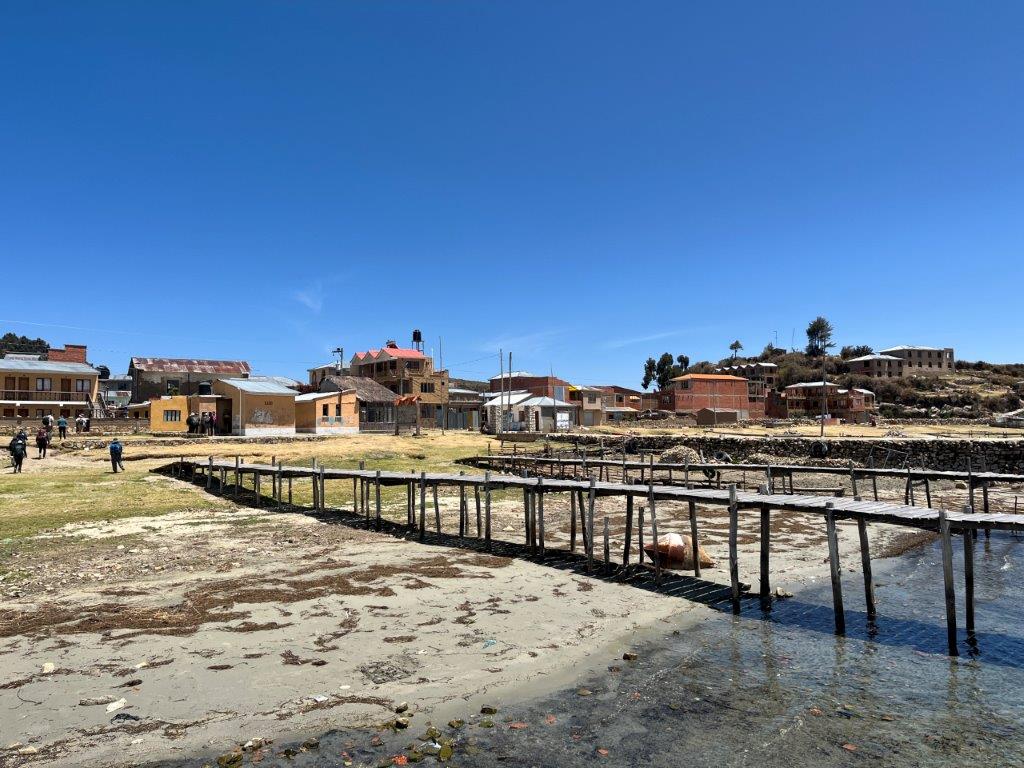
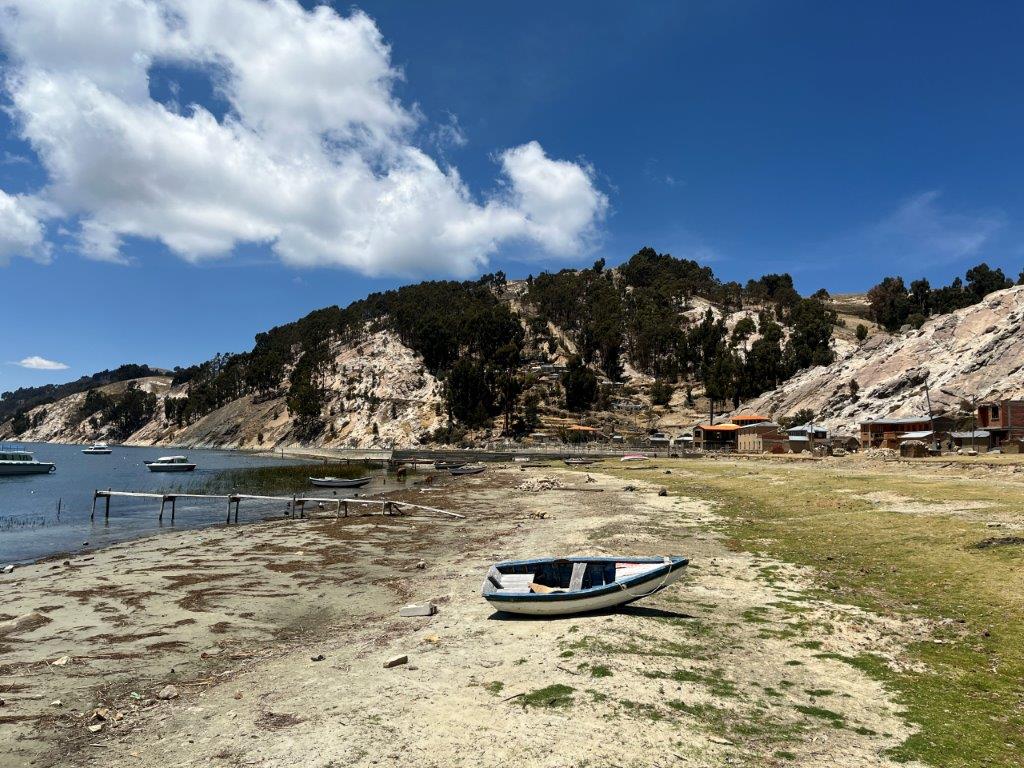
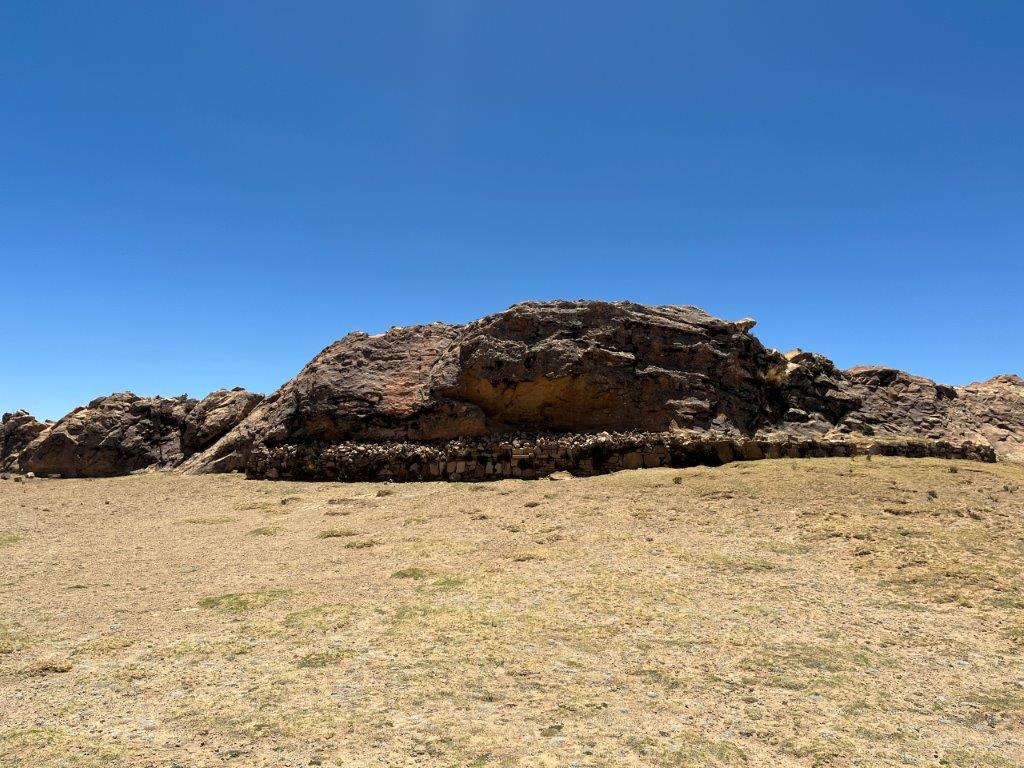
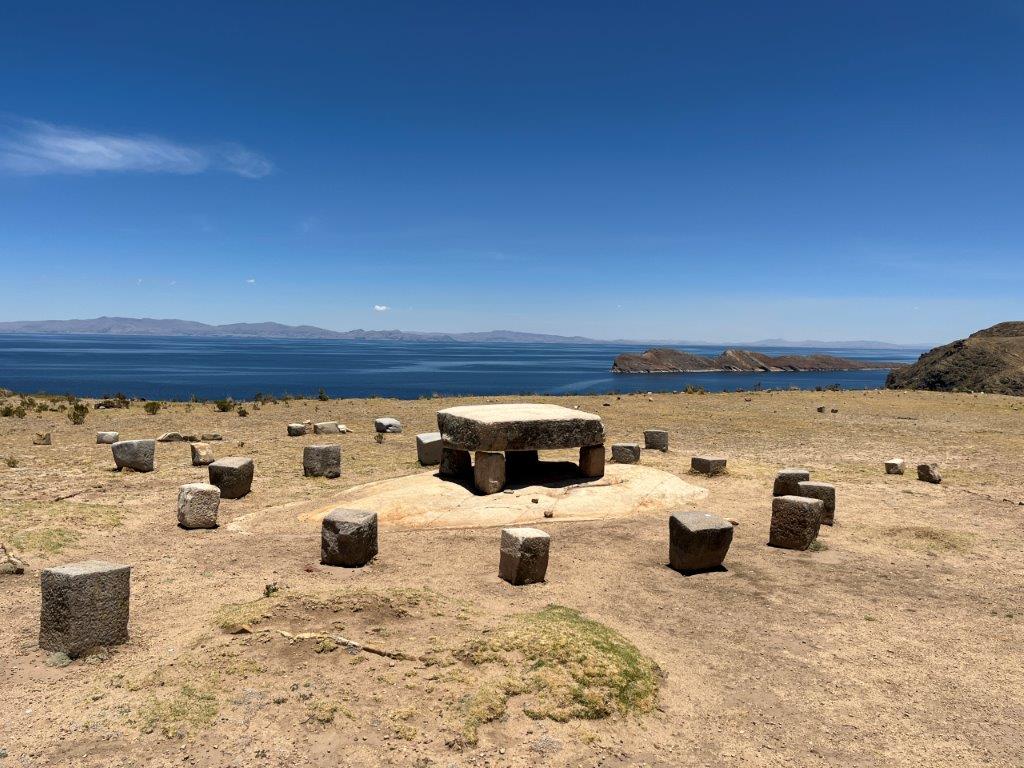
On the northern end of the island there are 3 main things to check out. I’m a little confused about the timings but its sort of irrelevant anyway because it all happened centuries ago and is subjective. But basically, besides the natural beauty there are three things made of rocks. The first is an actual rock with a rock wall in front of it and is called Titikala and a few other names. It is said to be the rock where the sun and moon were born. And also the start of the Inca empire? In front of that is a sacrificial table or altar. I’m not sure who they used to sacrifice but I’m guessing virgins. And just female ones.
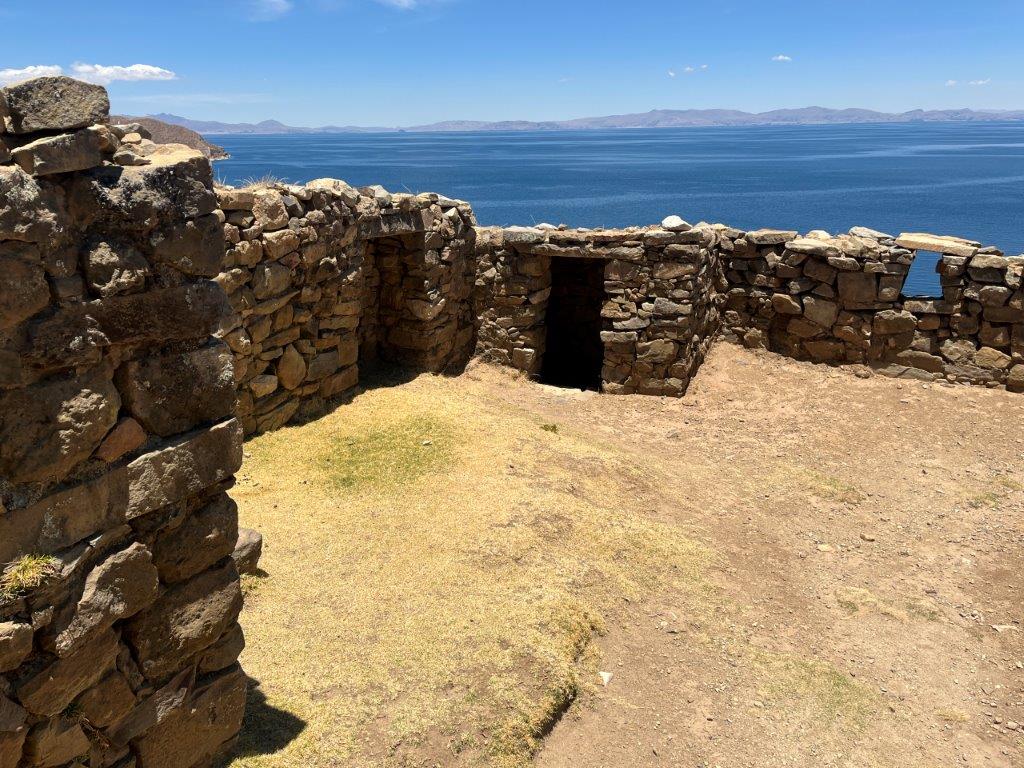
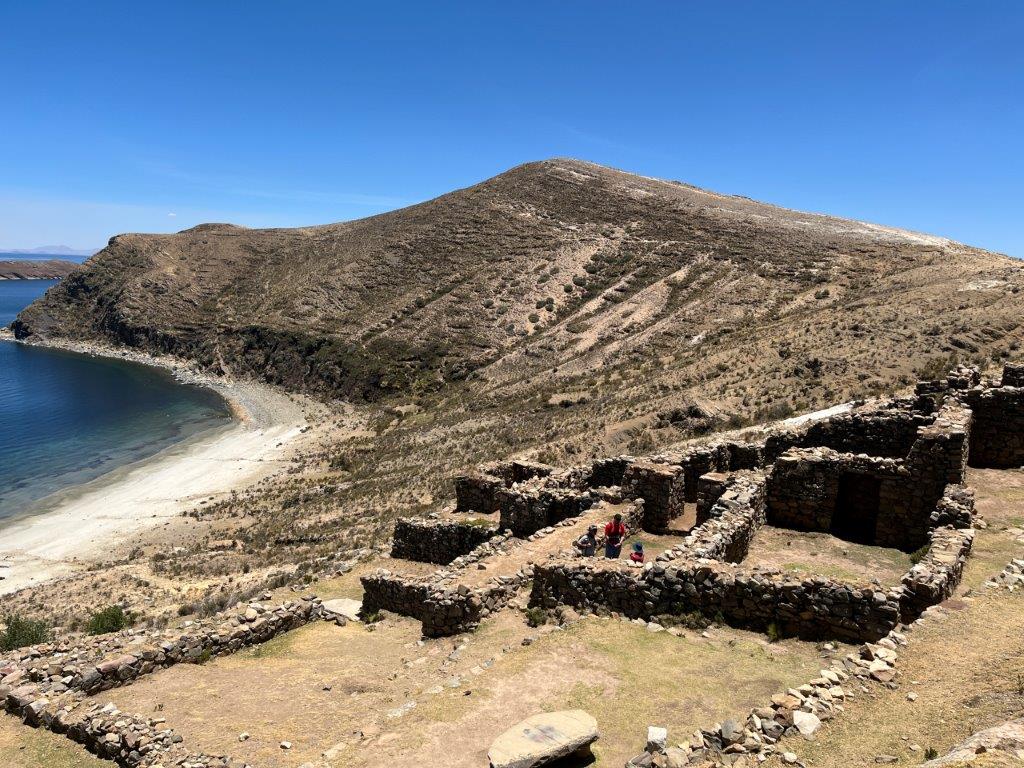
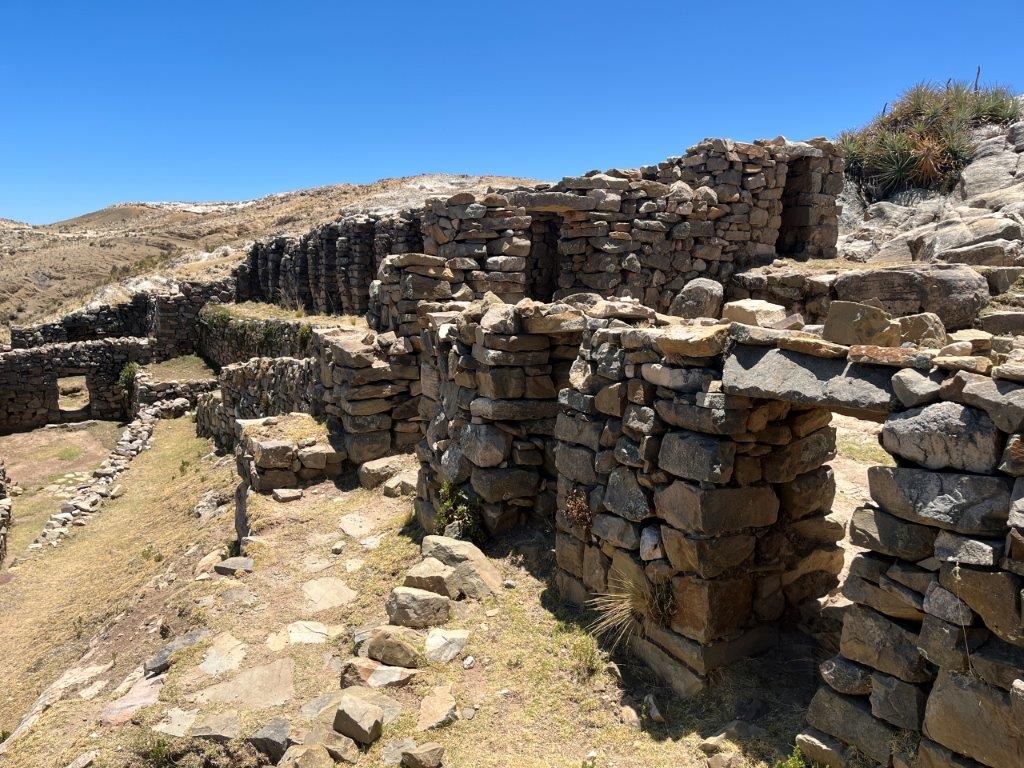
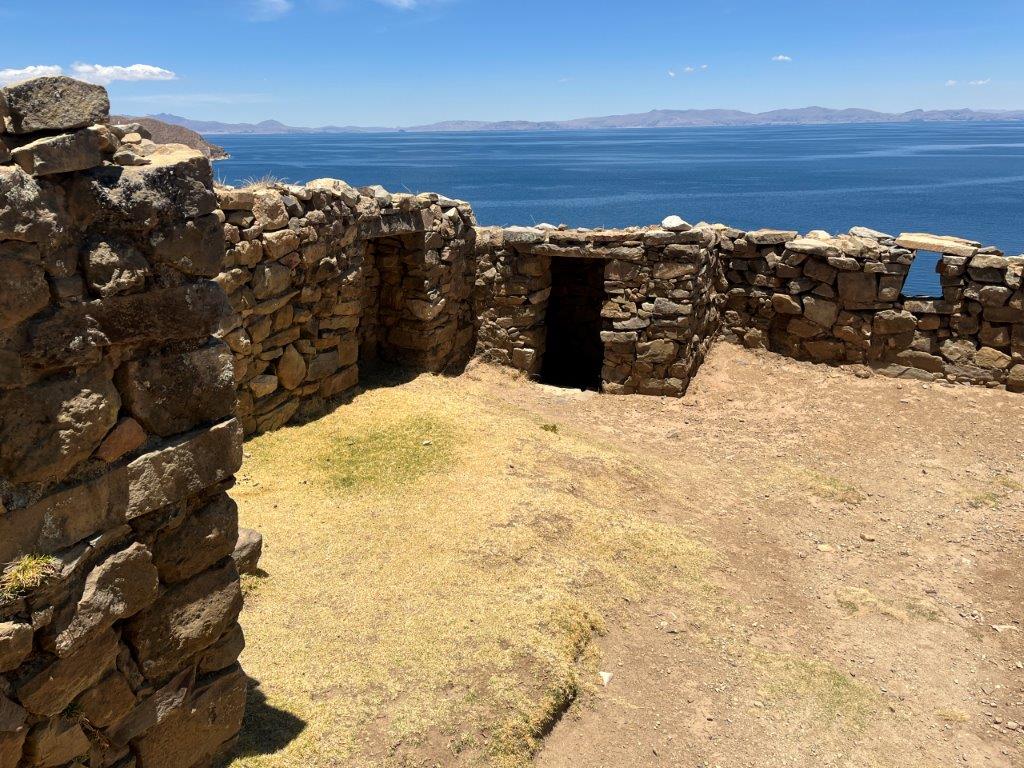
And a bit further over is my favourite, the Chinkana, which means hidden in the Quechan language. It’s also known as the maze. I had a lovely wander around by myself with an eye to renovating it. It was nice to see an Incan ruin built with such a stunning view. I like looking at the stuff the incans did from a structural perspective. The whole daytrip was worthwhile just to see that bit. So lots of pictures.
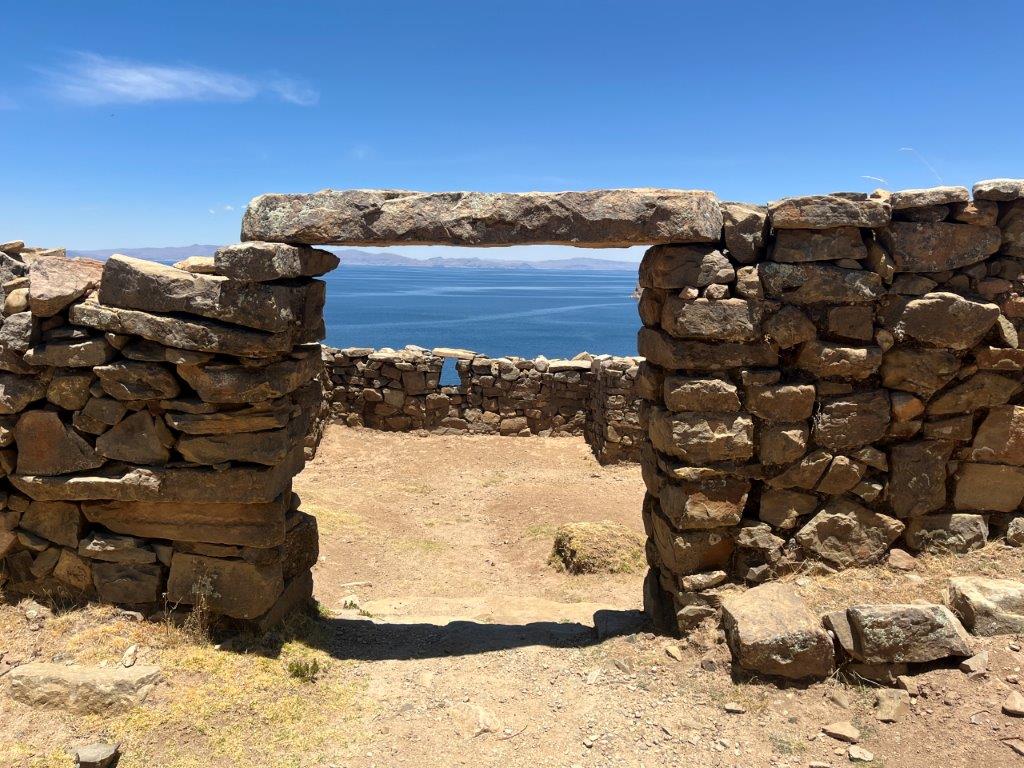
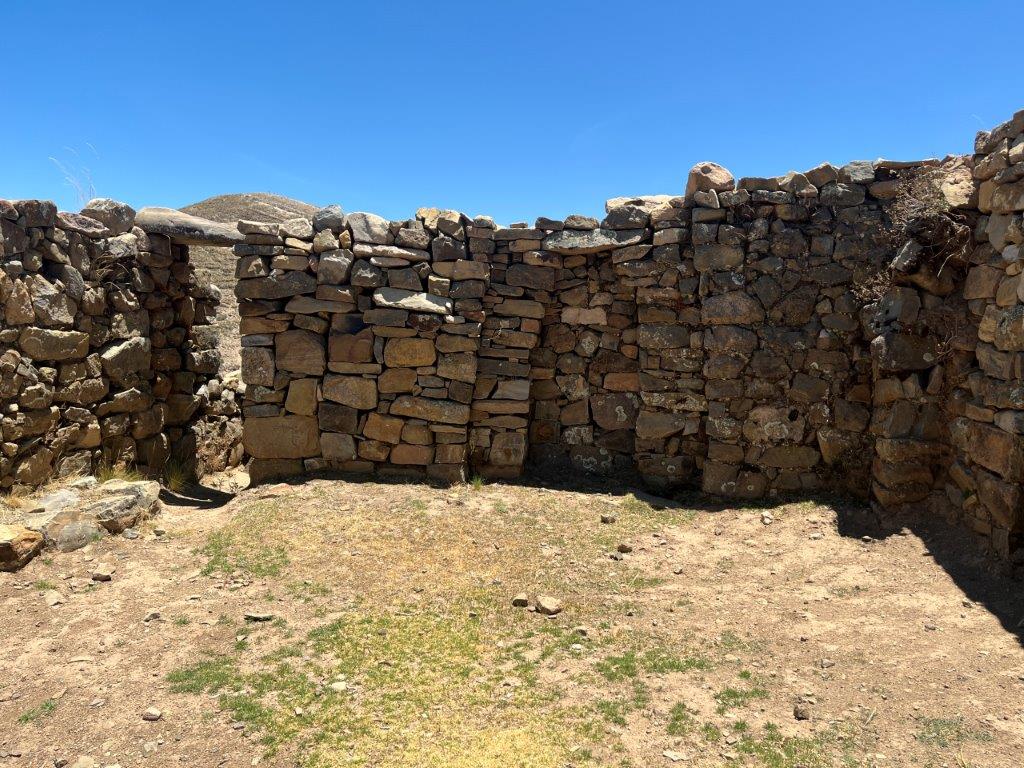
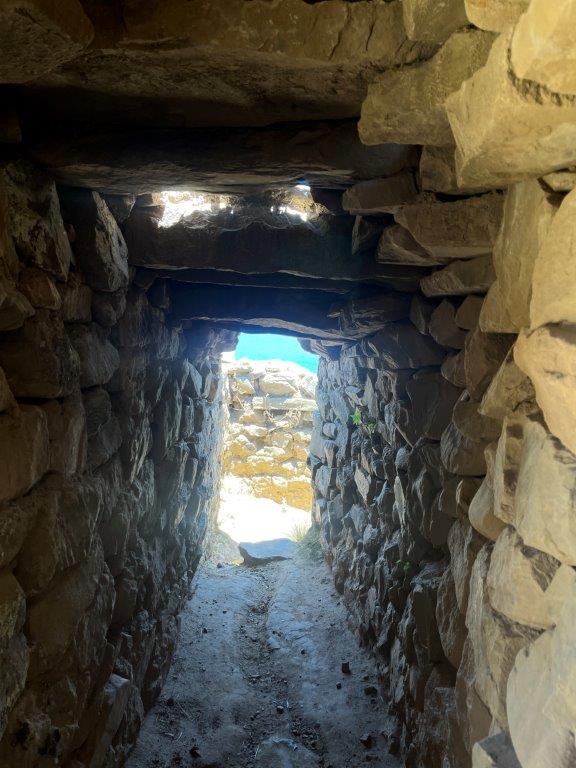
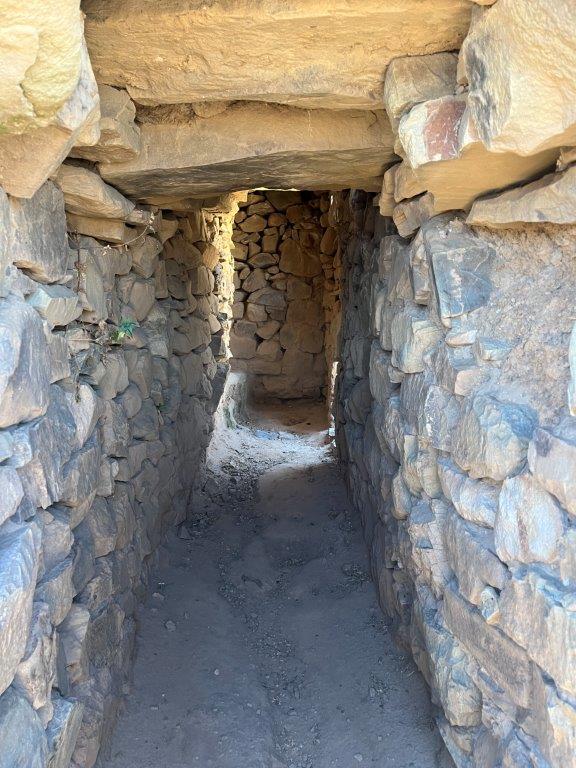
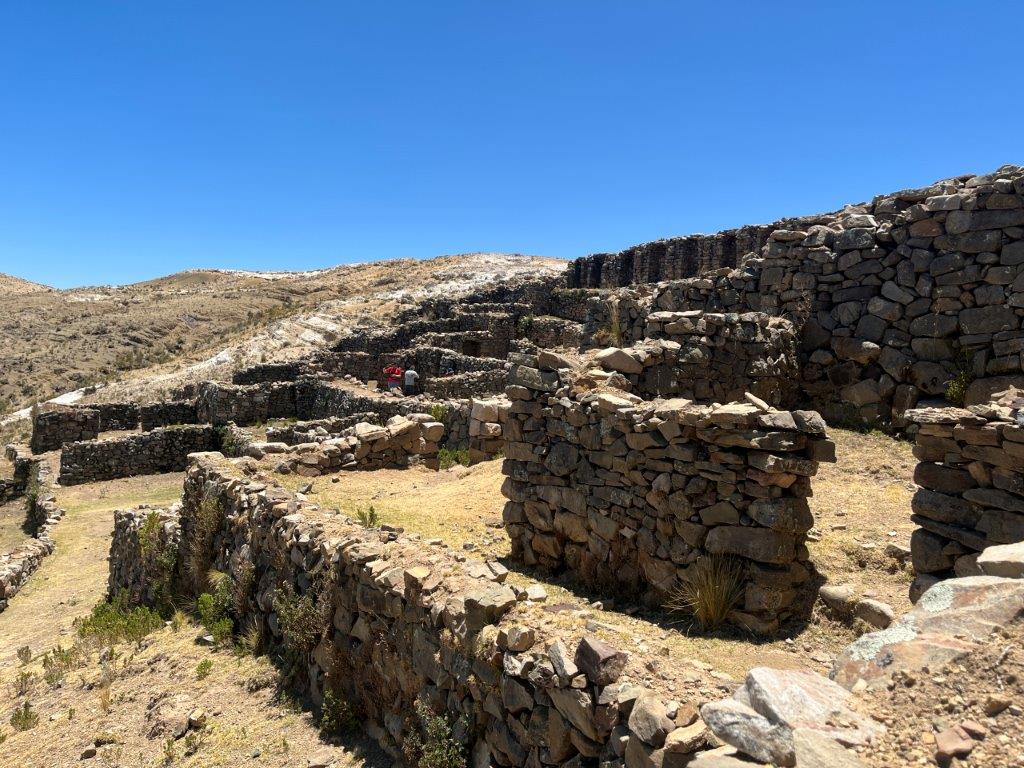
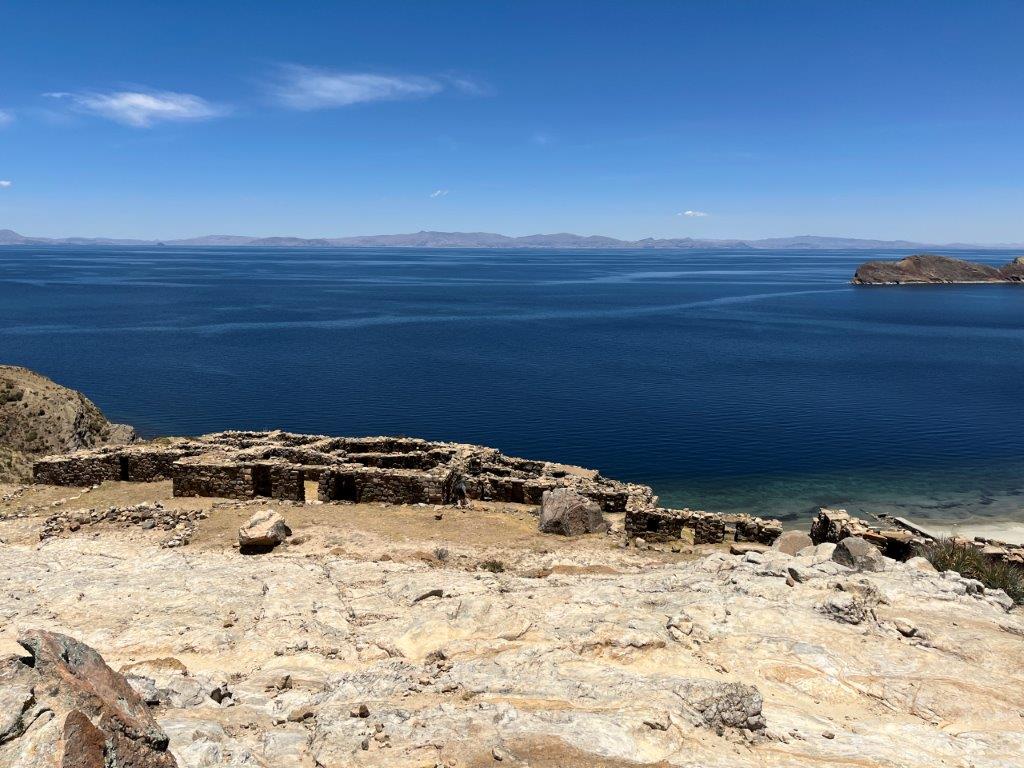
From there the path went south and up and down and round and round. The young dutch guy caught up with me when I stopped to talk to an American couple who were spending a couple of nights on the island. There are a few homestays and things if you wanted to do that. I didn’t recognise the young guy because he was covered in sunscreen and hiding under a hat and looked wrecked. We stopped for an overpriced drink at a little kiosk on the track and then again a bit later when we were robbed by some old guy who said he was the keeper of the track or some rubbish. We gave him a few Bs for his effort and entrepreneurship.
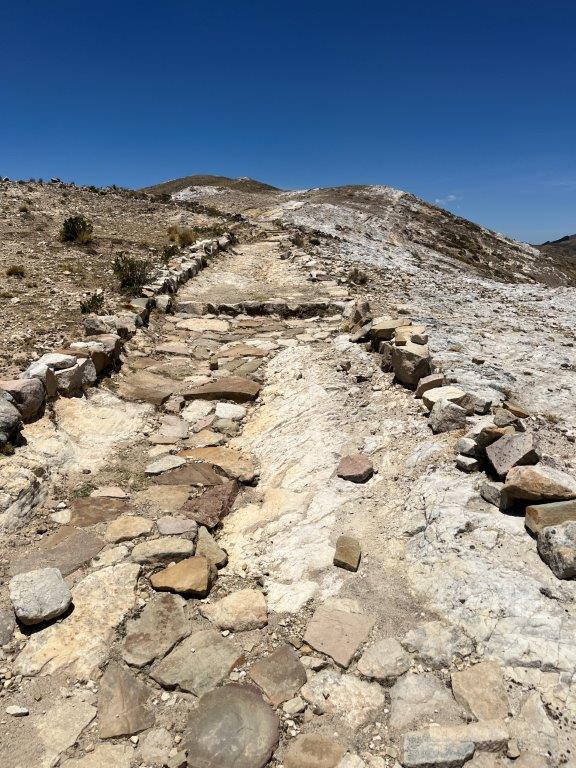

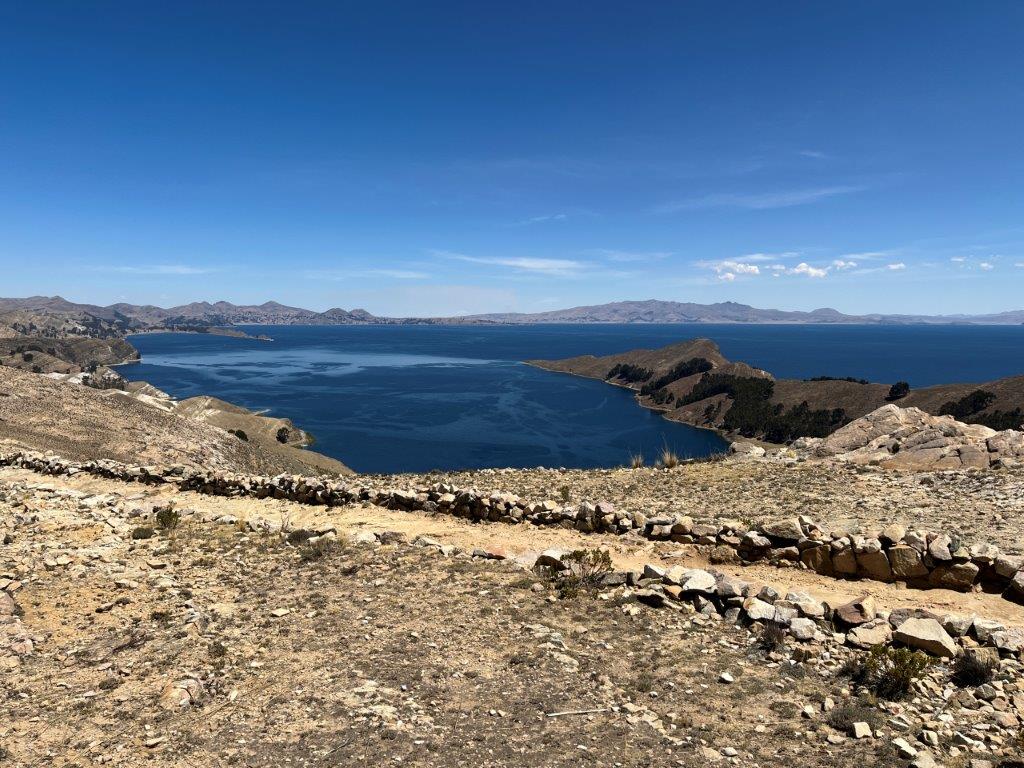
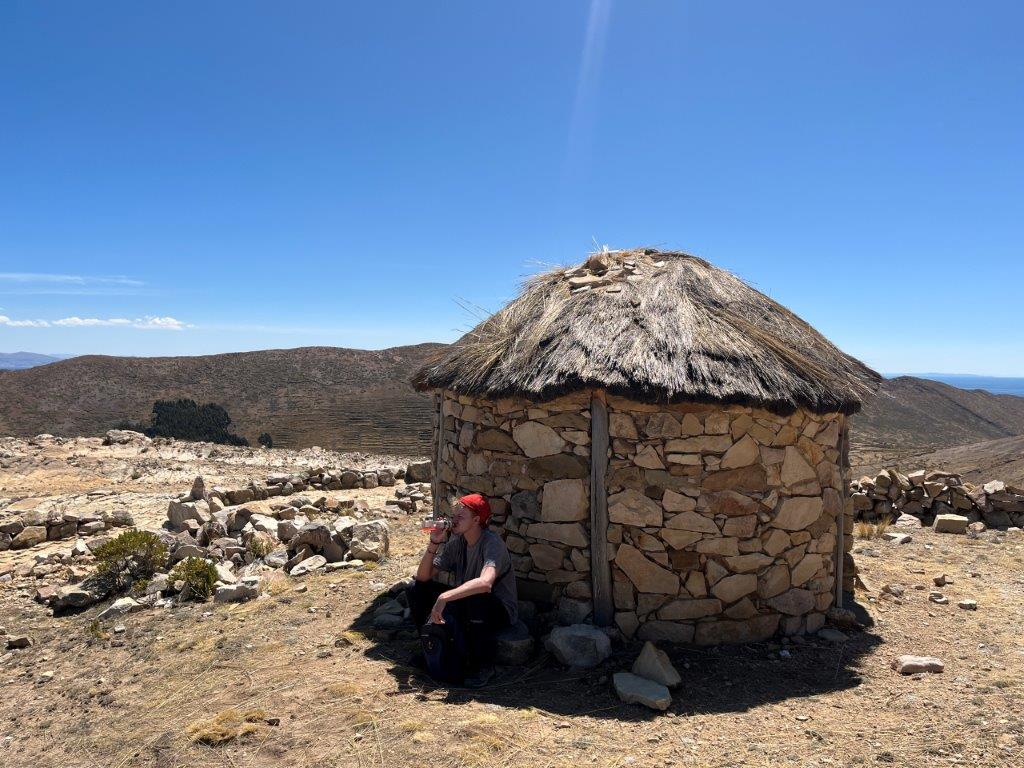
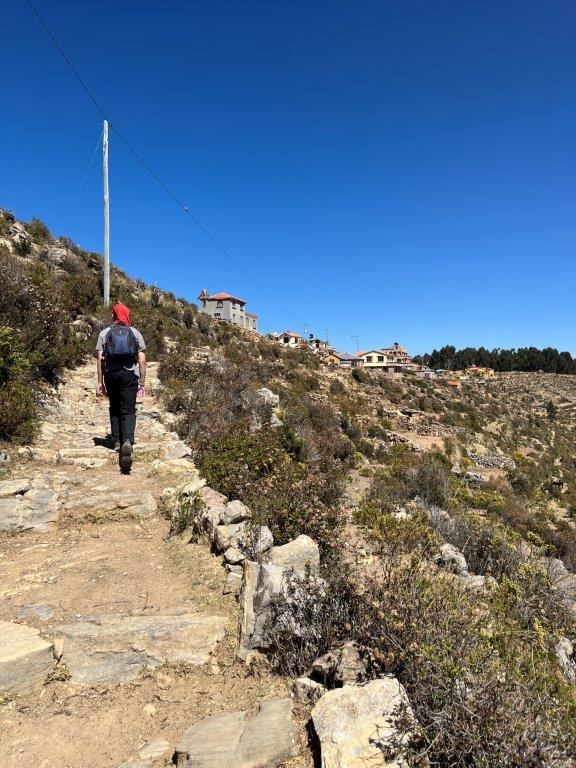
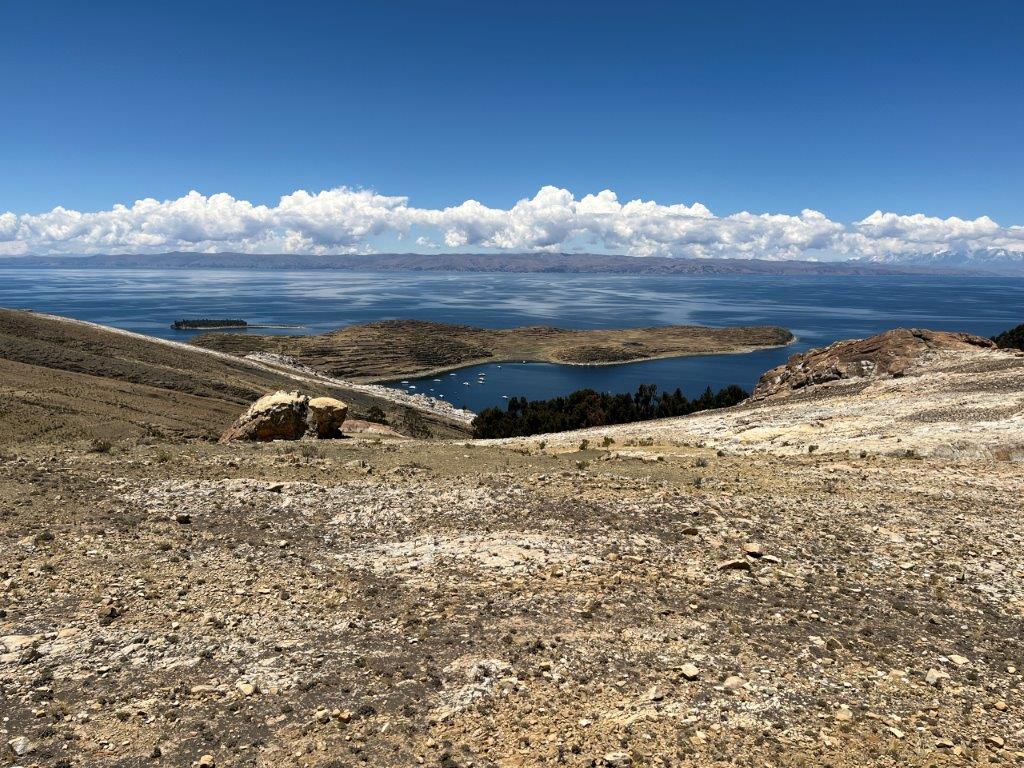
We were also under a bit of pressure to keep walking as the last boat left at 4:30 and time was ticking away. We arrived at the port town with a bit of time to spare and decided to have a meal overlooking the great view. The photos again don’t show how nice it was and I was hungry and forgot to photograph my locally caught fish lunch. But the lunch took a lot longer than promised and it turned out that we were still 15 mins from the boat so we had to bolt.
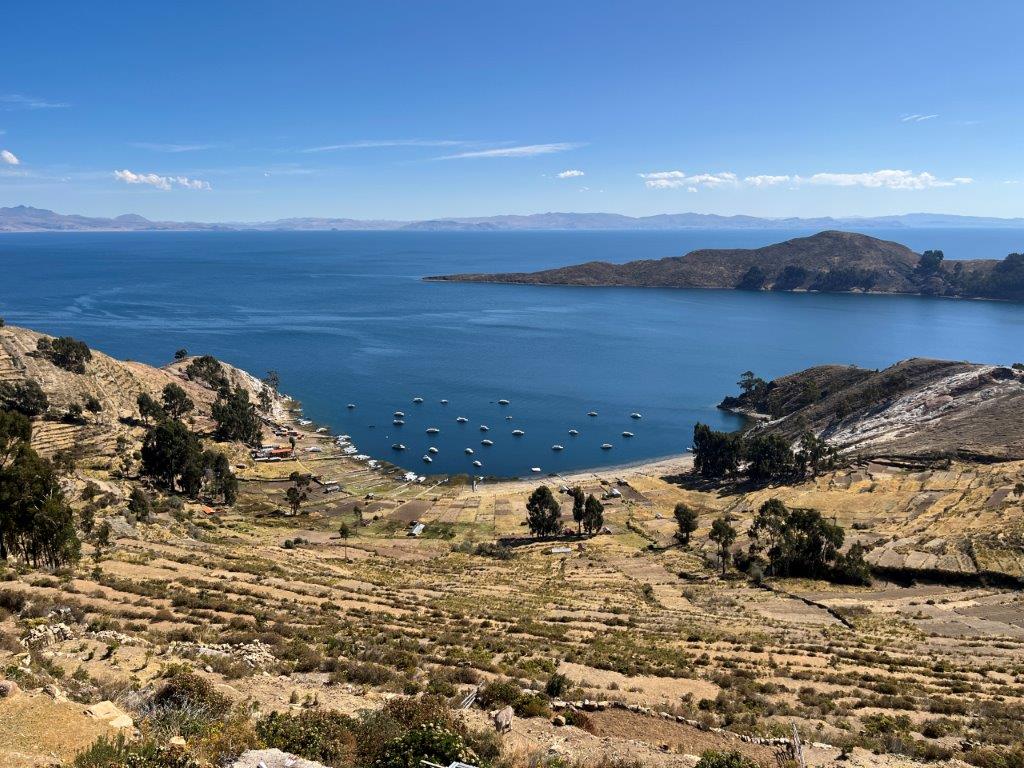
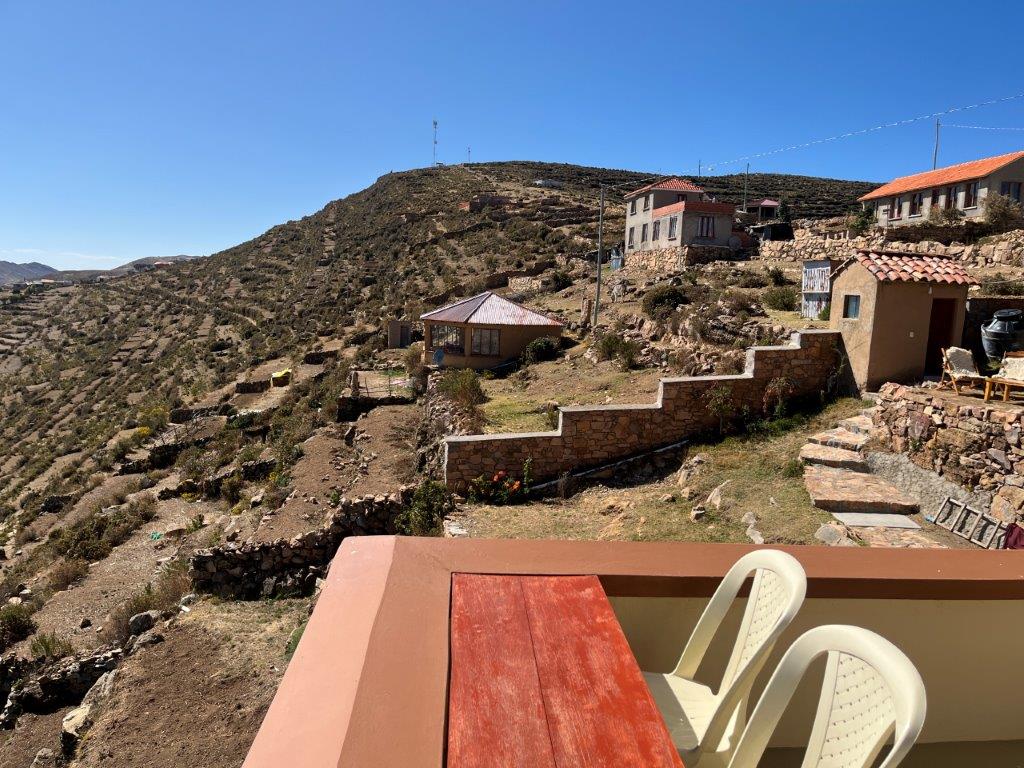
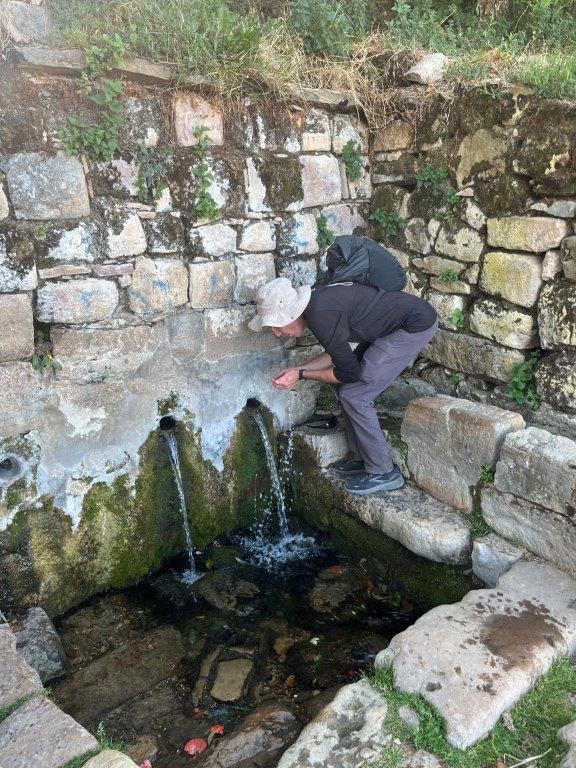
I was a little disappointed that we had to rush the last bit because there were two more things I wanted to see and they were in that part of the island. But fortunately one was the Inca Stairs which we had to descend to get to the boat and the other was the Incan Fountain of Youth which was off to the side of the stairs. In my rush to drink from the eternal spring I put my hand on the back wall for support and it was a stinging nettle of some sort. And it burnt my hand. It was sore for a couple of days. I even thought I may have to get it looked at as I woke up next morning and my hand was cramped up. But it’s fine now. The water was nice by the way. I’ll see how it goes.
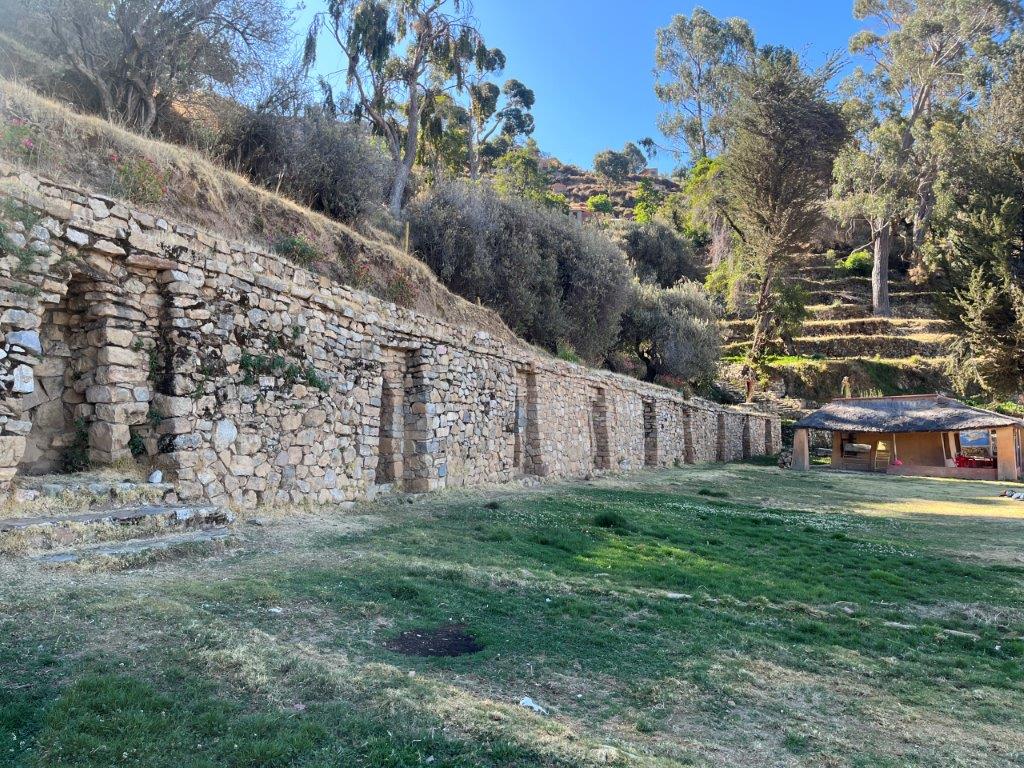
We made it down to the bottom against the surge of newbies arriving from the boat that we were returning on. They had opted for the overnight version of the walk in reverse. We had enough time to donate another 2Bs to the island and photograph another rock wall and then we were back on the slow boat to Copacabana. Actually the return boat was a bit bigger and nicer. To the relief of the Dutch guy we left almost on time as he had to catch a bus at six o’clock to La Paz. But then we pulled into another little cove and sat there for 20 minutes waiting for a guided tour group to casually make their way down the hill and onto the boat.
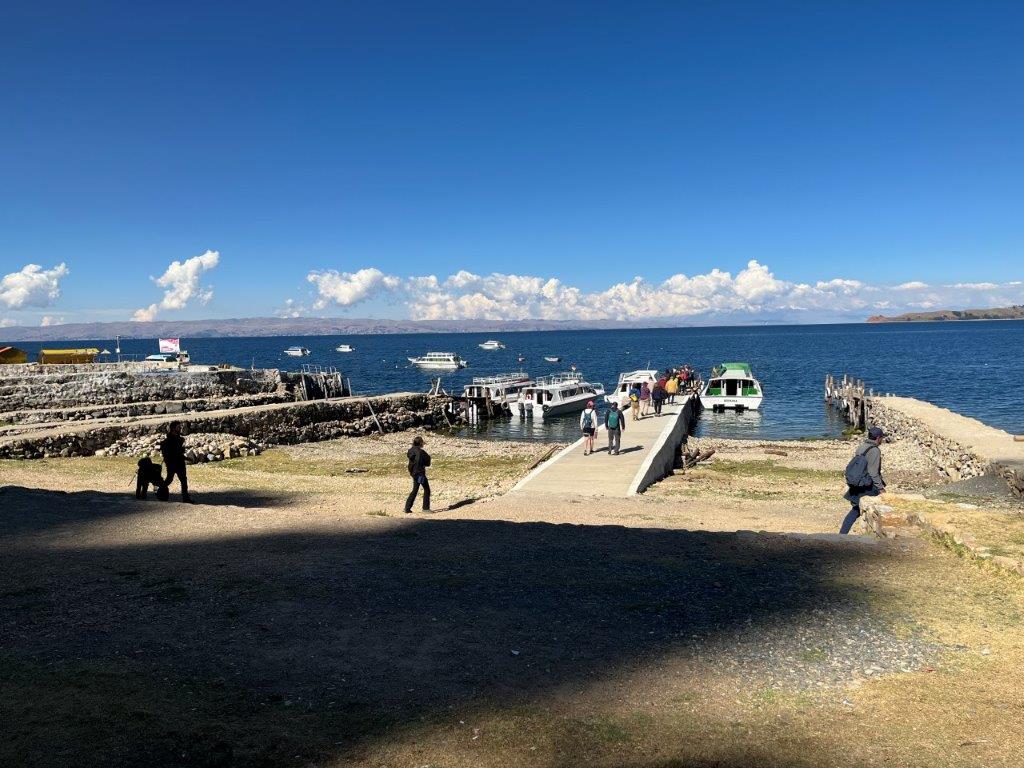
We rounded the point into the harbour at ten to six and then he had to bolt back to our accommodation and get his gear and get back to the bus stop. I had a leisurely wander up the hill to the hostal and passed him all hot and sweaty running in the other direction towards the bus at five past six. I’m assuming it left on Copacabana time as he never returned that evening. It was a lovely day, I got to learn a bit, sail on the lake and had a good workout and slept like a log.
 Gotaway