How lucky am I? Pete the chippy down here says there’s no such thing as luck but it’s the moment when preparation meets opportunity. Perhaps he’s right but when you find yourself in the middle of a David Attenborough video moment you can’t help but feel very, very lucky. I might be living in the middle of nowhere in one of the remotest locations on earth but that means I get to visit one of only 40 Emperor Penguin colonies in the world and it is definitely a highlight of my year down here. Auster Rookery is about 5kms past the Macey islands which are located about 45kms east of Mawson Station. It is only accessible in winter when the sea is frozen. Five of us headed down there a couple of weeks ago in two Hagglunds. Just driving down there on the frozen ocean is such a treat. Following an imaginary road using a GPS it takes about 2 hours to get to Macey Island where we have a hut. The huts down here are very similar to the other huts that we have up in the mountains and are small and basic but can be warmed up and sleep four people. At Macey we also have an apple, or is it a small melon? Bit of conjecture amongst returning expeditioners but either way it a small fibreglass pod that sleeps another two people.

From the hut its 5km or usually half an hour drive on a winding trail through icebergs to get to the penguins. On the way we did find a soft spot in the ice. It changes daily as it moves and cracks and rides up on itself and then gets covered with a layer of snow. It’s a little scary when you think that you’re out driving an icy skin on top of a deep, open ocean in a vehicle that weighs a few ton! The Hagglunds are made for this job and actually float if you break through and have escape hatches on the roof. We have lots of training and they are loaded up with recovery gear and survival supplies but no-one wants to end up a photo on the “Wall of Shame “in the Mawson Bar. It’s also a lot of work to rescue them so when the Hagg we were following dropped half a metre we were glad to see it didn’t drop right through and was able drive itself back up on the hard stuff again. Needless to say we didn’t follow them and we spent the next hour drilling the ice and rerouting around the soft spot. And at about $500,000 a pop, losing one wouldn’t be looked upon favourably.
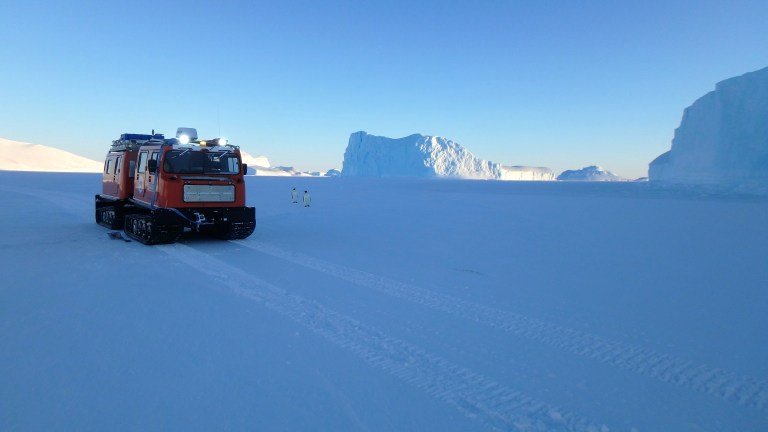
We had to stop on the way there as we came across a couple of penguins heading in the same direction. Antarctic road rules say the penguins have “right of way”. Wow. They are so lovely. We are not allowed within 5 metres of them but when you stop, they are so inquisitive, they come up to you. Apparently they don’t have the same rules as us and can come as close as they want. They check you out, stretch themselves out to show you they are over a metre tall, flap their wings, have a bit of a chat and eventually continue off on their journey. We would have loved to offer them a lift as we were headed to the same place and they may have already travelled over 50kms with those short little legs. Those legs have some pretty serious toenail/claws which are put to great use to propel them when they flop onto their bellies and slide across the ice. So so cute. They weigh about 30kgs. I know you wanted to know this.
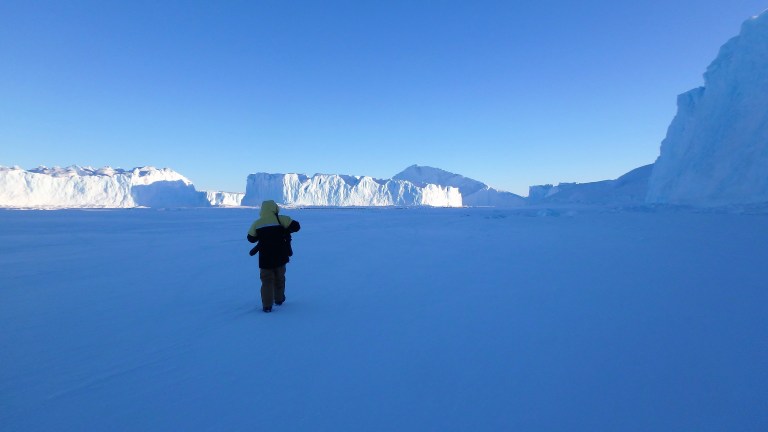
Every year the penguins find a location in a similar area amongst the changing bergs so that they can lay eggs and hatch their young. Unlike other penguins down here they don’t go ashore to do this but lay them on the ice, except for 2 recently located spots (maybe they’re trialling for climate change when they lose the ice). One of those is near Mawson but due to bad ice we probably won’t be able to visit there this year. When I say on the ice, the eggs are laid (or is that layed?) by the female and then the egg is put on the male penguins feet and is covered over and protected by their big drooping belly. Then the female buggers off to the ocean which may be up to eighty kilometres away because they haven’t eaten for months. Once they’re full they head back to feed the chick that would have hatched in their absence. They meet the new kid, tag out and start regurgitating out some baby food while the male heads out on the long journey to the ocean to get a feed and some extra food for the growing chick. They rotate like this until the chick is old enough to stand on its own two feet. Then I guess the ice melts and they swim around until it all happens again next year.
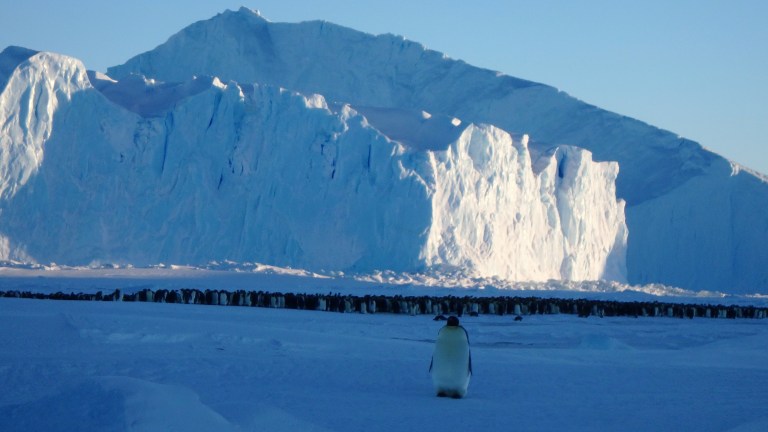
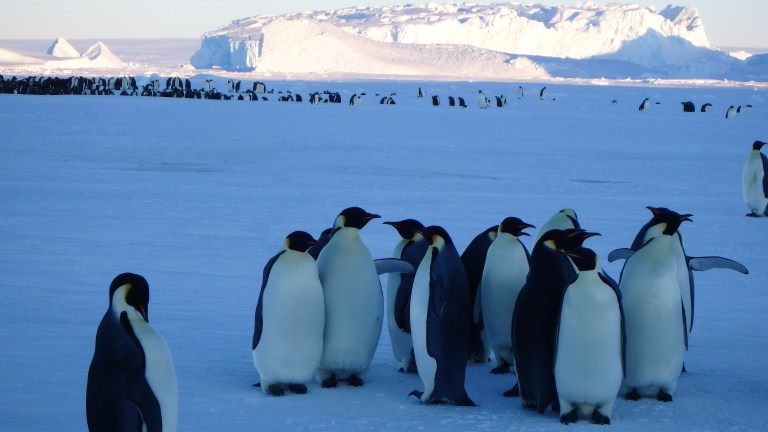
It’s amazing to think they live in such freezing temperatures, in such a hostile environment, standing in the one place in the long months of darkness. No wonder when we rock up they are so keen to come and check us out. We have to park about half a kilometre away, behind an iceberg and walk in. As you wander in you see them heading in or heading out. They stop and say hello and continue on. It’s so so so cool. In the distance you can see the long line of huddled penguins. We are only allowed to go within 50 metres of the nesting birds which is fine. The ones with chicks or eggs all huddle up together and just look our way but the single ones or childless ones wander up for a closer look. We just sit down on the ice and they come up within a metre or two, depending on how many there is and how brave they feel. It’s even cooler than your arse sitting on the ice. We spend a couple of hours there until we get too cold. We plan to go back a couple of times as the chicks grow and come out to crèche. They are spectacular, the location spectacular, the bergs spectacular, the trip, yep, spectacular. I’m so lucky.


Unreal Shane!!
Can you please write a book!
LikeLike
I loved reading this post and enjoyed the great photo’s. I really liked the theory around luck, that we often make our own through preparation and opportunity.
LikeLike